The island of Bali
Land, people and culture at a glance
The island
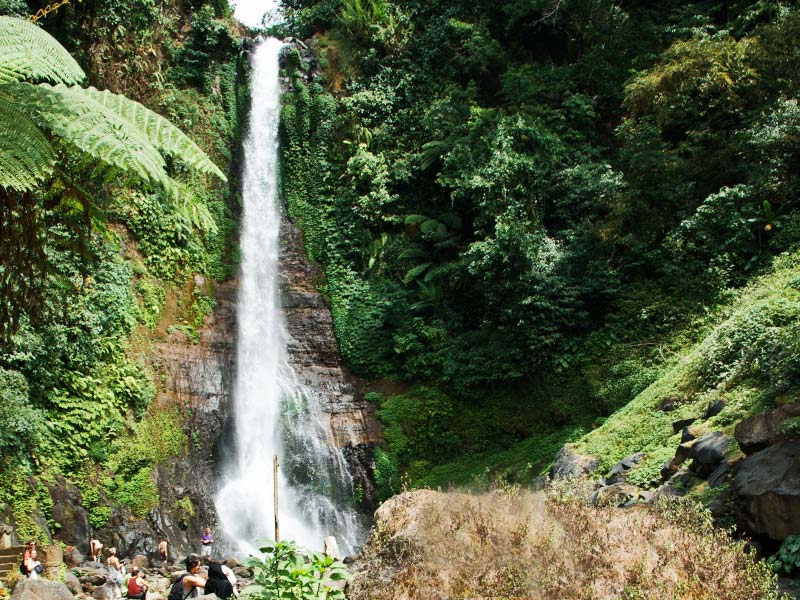
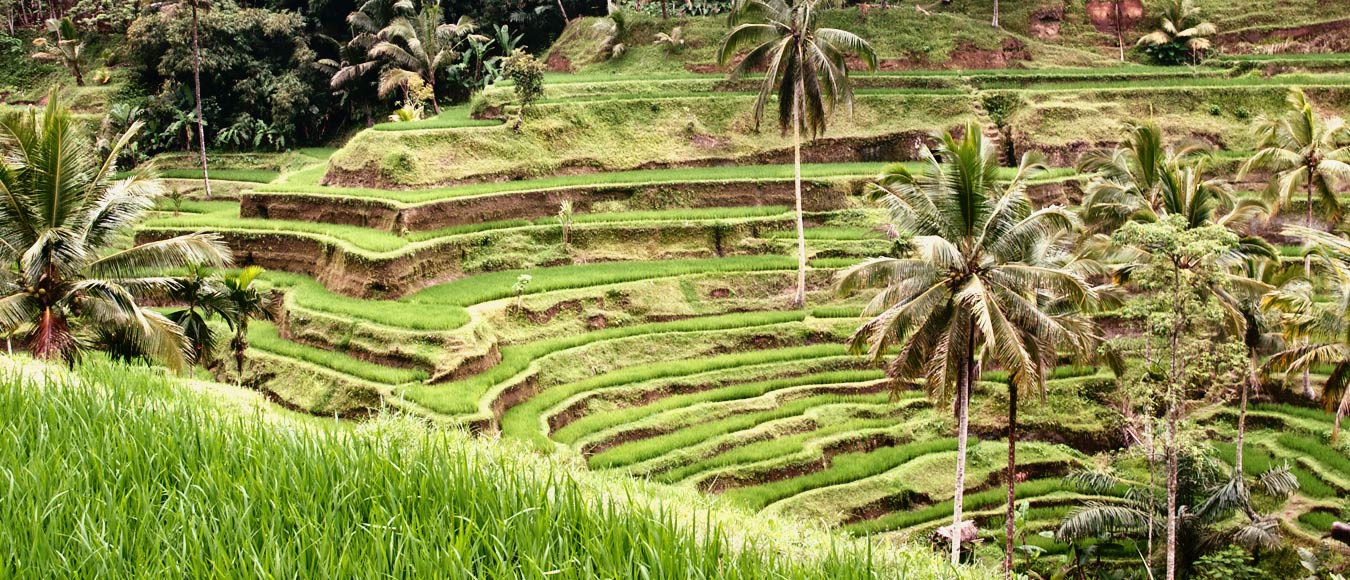
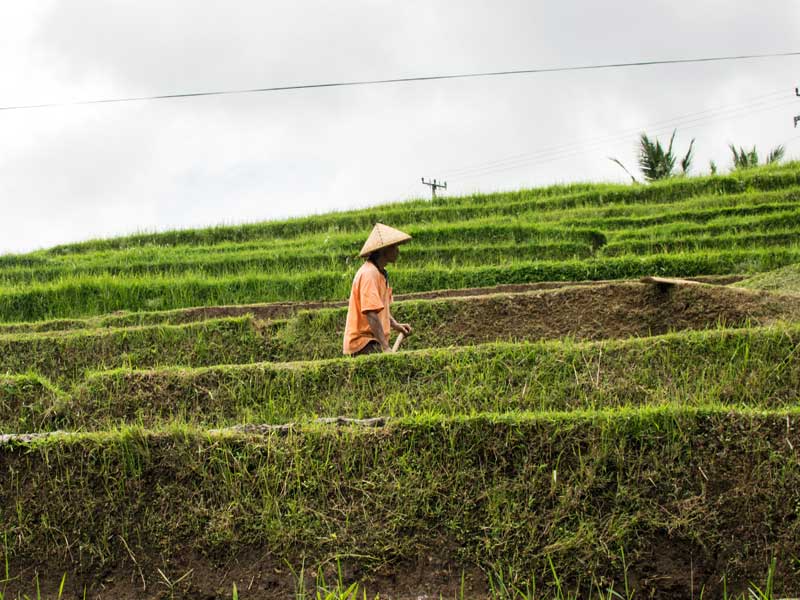
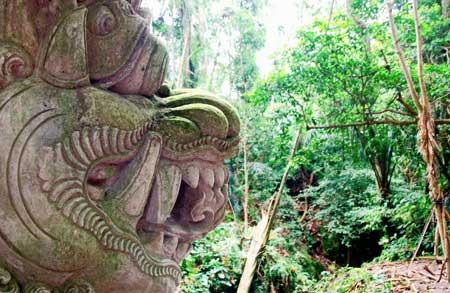
The island covers an area of 5,561 km² and is the westernmost of the Lesser Sunda Islands. The capital of Bali is Denpasar. The province of Bali lies in the Indian Ocean between Java and Lombok. It stretches 95 km from north to south, and 145 km from its western tip to its eastern tip. Up to six vegetation zones can be found on Bali within a very small area: tropical rainforest, cloud forest, wet savannah, mangrove forests, lava landscape and cultivated landscape (e.g. rice terraces).
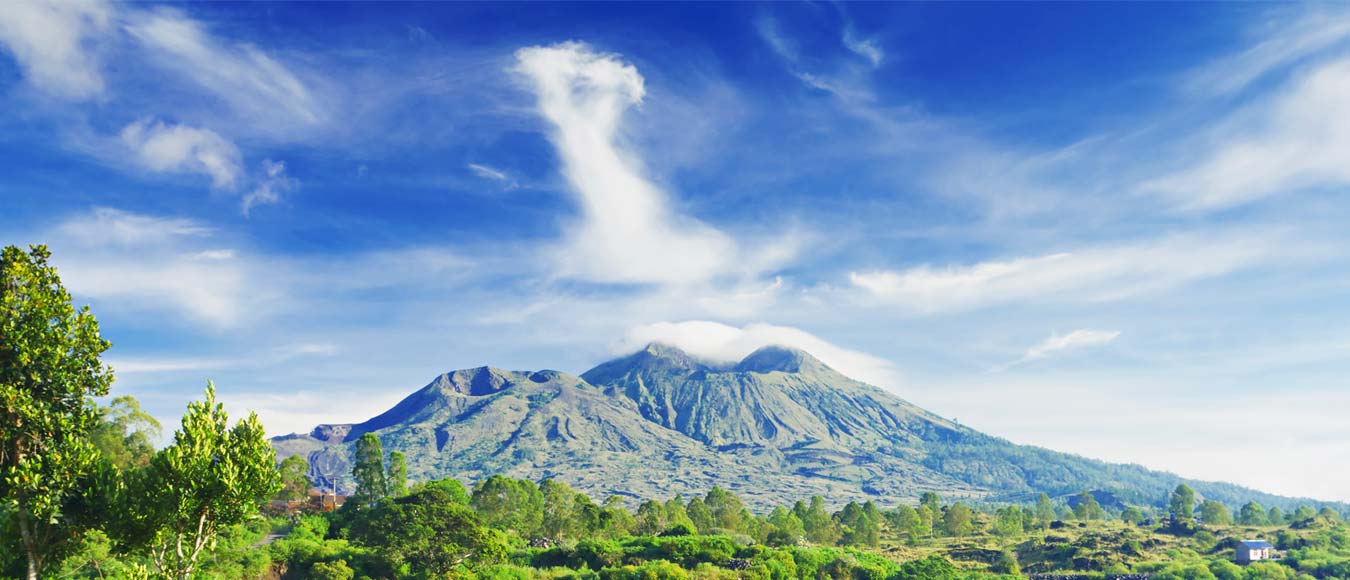
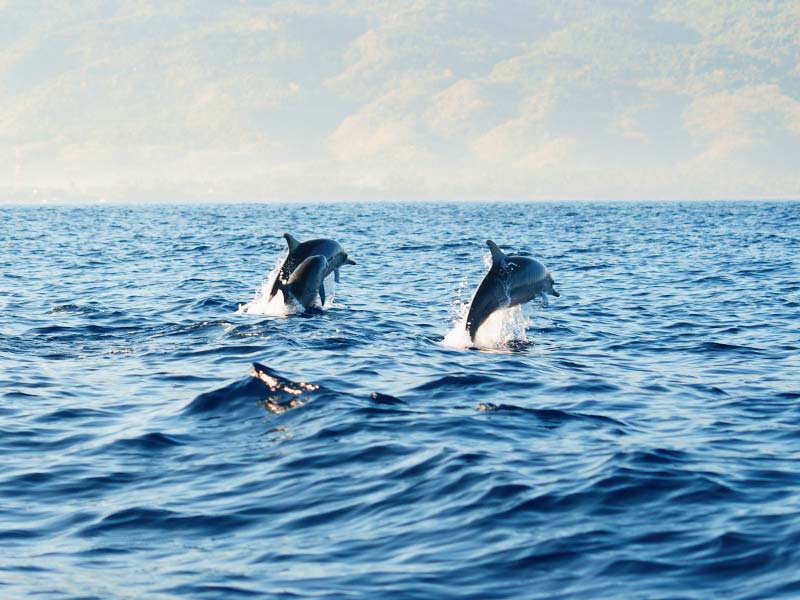
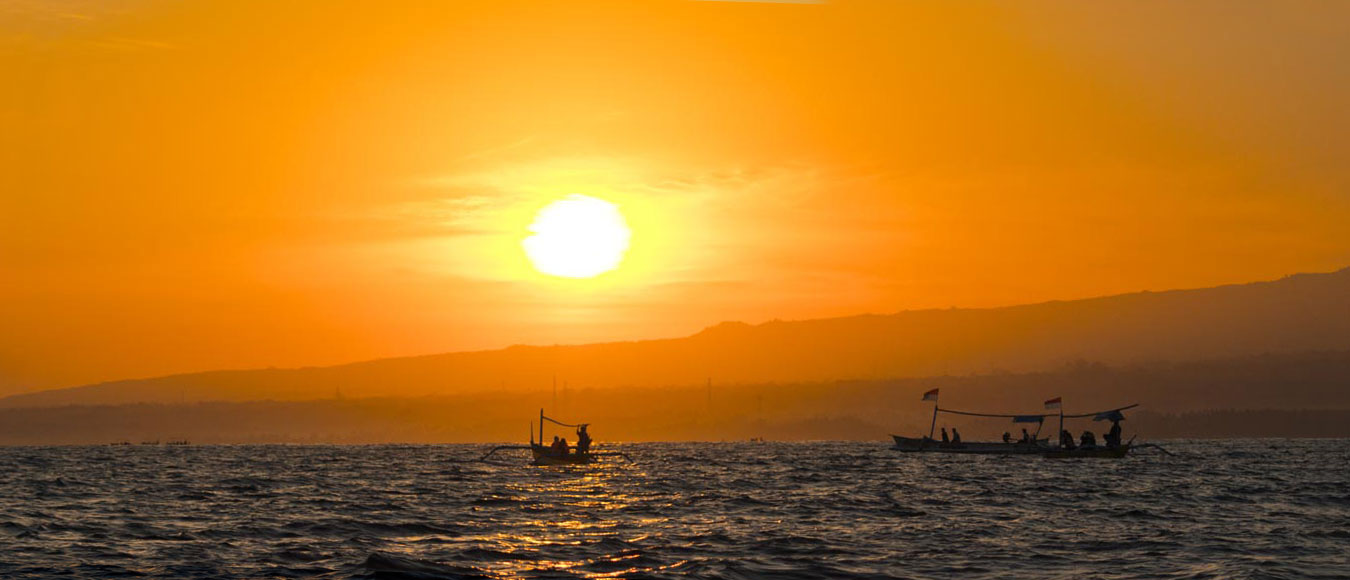
The fauna and flora hardly differ from those of the Malay mainland. Animal residents of the island include stray dogs and cats, monkeys and lizards, and in the rainforests there are also snakes, wild boar and deer, as well as many different species of birds, including the Bali starling, which is found only on Bali. Off Bali's coast there are extensive coral reefs that invite you to snorkel or watch dolphins. Three quarters of the island's total area is covered by mountains of volcanic origin. At 3,031 metres, the volcano Gunung Agung is the highest mountain on the island and the seat of the gods. West of Agung lies the huge, ten-kilometre-wide volcanic crater of the Batur massif.
The people
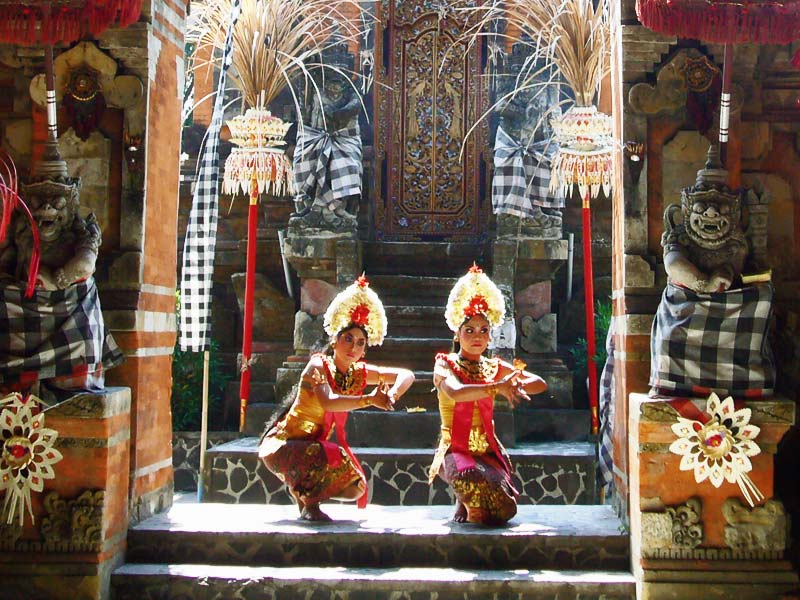
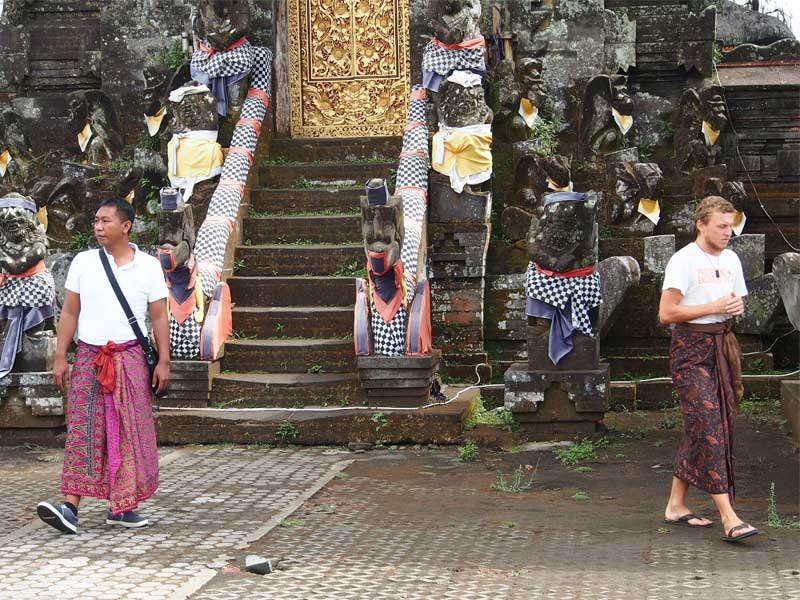
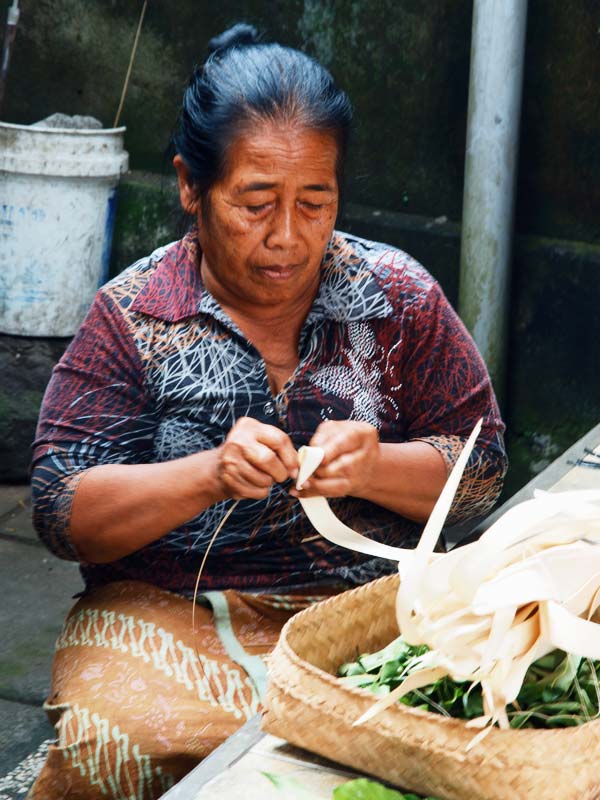
About 3.9 million people live on the Indonesian island of Bali. The official language is Bahasa Indonesia, derived from and very similar to Malay. However, people speak Balinese, because, like the inhabitants of many other Indonesian islands, the Balinese have their own language. English is usually understood almost everywhere, though. Most Balinese follow the Hindu Dharma religion, the Balinese form of Hinduism. The daily life of the Balinese consists of traditional rites and religious festivals that accompany them from birth to death and beyond. The cohesion of the family and the village community is of great importance in Balinese culture, but it is increasingly being lost in the tourist areas. Almost all festive events on Bali have a religious background and are opened with a temple ceremony. 5,000 dance and gamelan groups regularly hold their religious ceremonies.
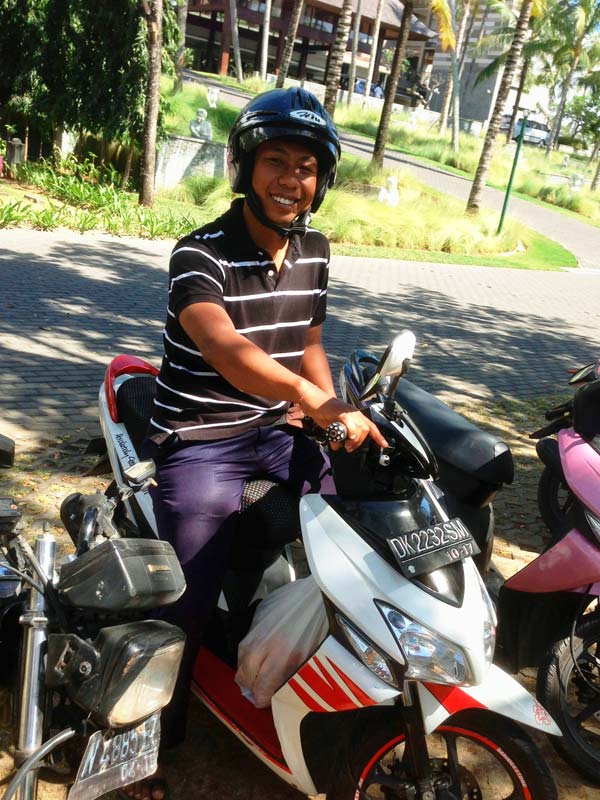
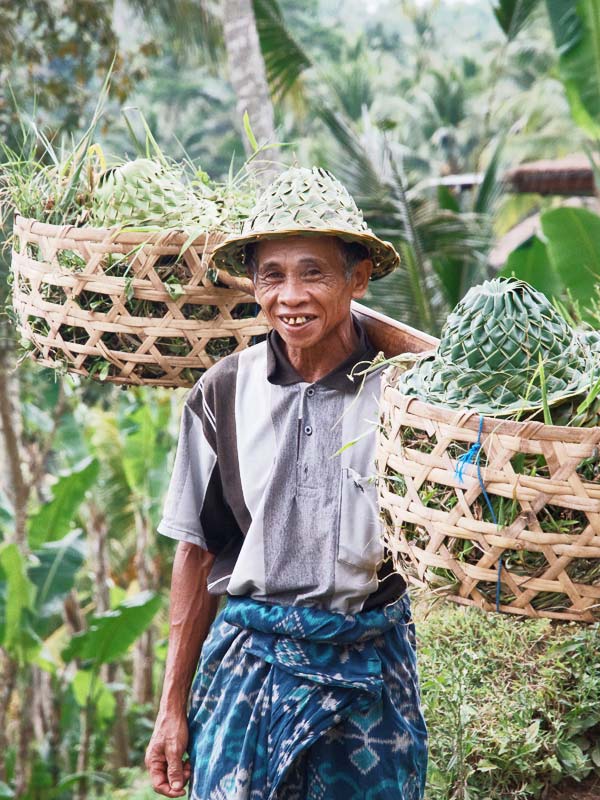
The people of Bali are characterised by openness, helpfulness, friendliness and tolerance. What is particularly striking is that the Balinese always meet holidaymakers with a smile. In the Balinese mentality, the smile is an expression of dignity and respect, and precisely in situations in which we Europeans react emotionally and cannot keep up our composure, Asians smile and remain friendly. The Hindus are very harmony-loving and peaceful people, as their highest principle is to avoid quarrels and conflicts. On your trip, adopt a little of the Balinese mentality — laughing relaxes you, and many annoyances can be resolved more easily and quickly that way.
The climate
Bali lies close to the equator and is therefore in the tropical climate zone. The climate is tropically hot and very humid. There is a dry season from April to October and a rainy season from November to March. The usually heavy rain is often accompanied by strong, fresh winds. Afterwards the sky soon clears again and the sun shines. During the dry period from April to September, the south-east trade wind blows, fed by dry air from the Australian desert. Temperatures stay at a constant 28 to 32 degrees Celsius all year round, cool down to about 21 degrees Celsius at night, and in the highlands the average temperature is 10°–20°C. With water temperatures between 28 and 32 degrees Celsius, you can swim all year round. The best time to travel is from April to October (dry season). Get used to the strong sunshine gradually and expose your skin to direct sunlight only briefly on the first days. Using sunscreen with a sun protection factor of at least 30 is particularly recommended. Avoid the midday sun and lie in the shade.
The food
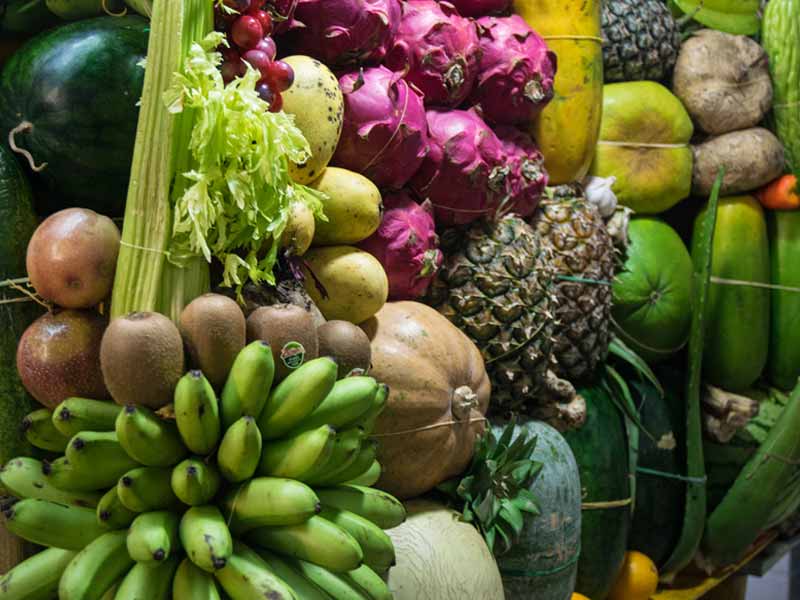
Bali's food is an Asian-Indian-European mix and particularly varied. The diverse Balinese cuisine has been influenced by both Western and Eastern cultures.
Every day, offerings are made from the day's dishes before people eat. On Bali, rice is the staple food, and no local dish is imaginable without it. Cassava and potatoes are occasional side dishes. The main crop besides rice is the coconut, which is often used for curry dishes. The spices garlic, ginger, cardamom, palm sugar, turmeric and above all chilli are widespread on Bali. Beef is available for tourists in restaurants and fast-food chains, whereas for the Balinese the cow is sacred. On Bali there is something for every taste, and the dishes are prepared deliciously in pans, on charcoal grills and in woks — at small roadside stalls, in fast-food chains and in top restaurants.
Typical local dishes are babi guling (suckling pig), nasi campur (a rice dish with various meats and vegetables), nasi goreng (fried rice) and mie goreng (fried noodles), and sate (grilled skewers with chicken, lamb, beef or prawns). Eating and drinking in Indonesia is generally very inexpensive, except in the luxury hotels.
The festivals
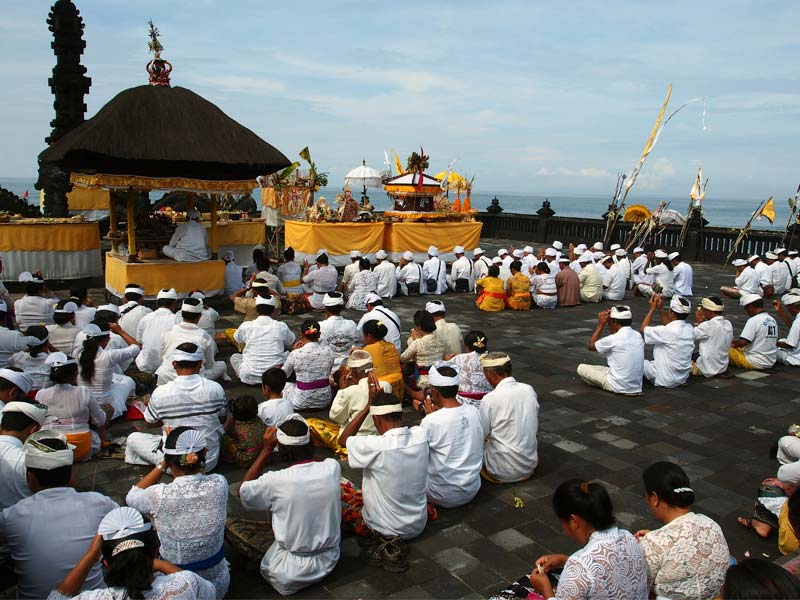
Temple festivals play an important role in the lives of the Balinese. They are celebrated on a grand and colourful scale, and everyone takes part. Holidays of other religions, such as Christianity, Buddhism and Islam, are also observed. The dates of the holidays are determined by the complex 210-day Balinese calendar. Offerings are prepared for every festival and ceremony.
Important holidays are Galungan Day, Kuningan Day and the Odalan festival. Every temple on Bali celebrates its Odalan festival once a year with great splendour. For the village community, the temple's anniversary, which takes place every 210 days, is the highlight of the festive calendar. As there are so many temples on Bali, one of these ceremonies is almost always taking place.
The New Year festival Nyepi marks the first day of a new year according to the traditional Balinese lunar calendar, Saka. Nyepi is the day of silence, fasting and meditation. All public life comes to a standstill, and neither private houses nor hotels may be left. Swimming in the sea, and using the beach at all, is also forbidden on this day. The highest Hindu holiday on Bali is celebrated on the day after the new moon during the spring equinox.
A large and above all cheerful ceremony takes place when the dead are cremated. According to Balinese belief, the soul of the deceased is reborn. The cremation ceremony is very elaborate and expensive for the relatives. This ceremony often takes place years after the death, because not every family can afford its own ceremony, and several cremations are held together.